
How Do You Buy a Long-Term Rental Investment Property in Huntsville?
To buy a long-term rental investment property in Huntsville, compare new construction, resale homes under $200,000, and fourplexes against your return goals. Verify realistic rent and expenses, then make a market-supported offer. For resale homes and fourplexes, negotiate time to inspect and verify the numbers before committing to close.
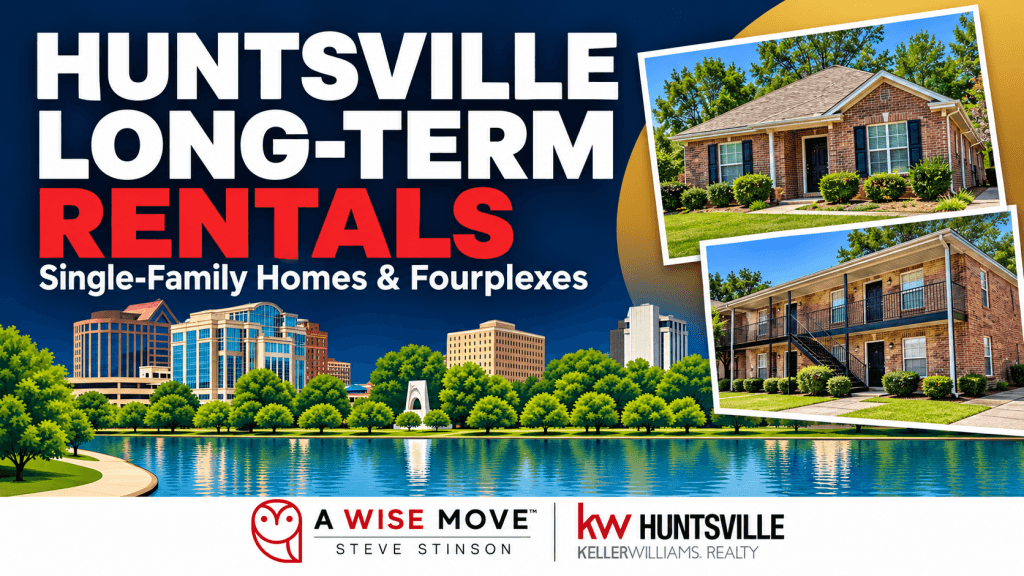
This guide is for investors who plan to buy and hold a property for long-term rentals. Huntsville also offers opportunities for flips and short-term rentals, but those strategies require different financial assumptions and property evaluations. They are outside the scope of this article.
I work with local and out-of-state investors pursuing long-term rental property in Huntsville and Madison County. The first conversation is usually about cash flow, appreciation, or adding another property to a portfolio. Soon enough, it becomes a conversation about expectations.
If you’re coming into Huntsville with firm investment targets, one of the first things we need to determine is whether this market can realistically support them. That starts with understanding what comparable properties sell for, what rents they support, and what ownership actually costs. Then you can decide whether to adjust your expectations, consider a different property type, or pursue another market.
This is especially important with fourplexes, where supply is limited and sellers often have little urgency to sell. An aggressive return target may require a purchase price the market simply doesn’t support. You can negotiate, but you shouldn’t build your plan around persuading a seller to accept a deep discount just to make your numbers work. My approach is to stay flexible enough to evaluate realistic opportunities, then use due diligence to determine whether the property deserves your investment.
Three Huntsville Long-Term Rental Options at a Glance
| Property type | Current examples or working targets | What to weigh |
| New-construction single-family homes | $275,000 to $300,000; expected rents of $1,800 to $1,900 monthly | New systems and less immediate repair exposure, but financing can leave cash flow tight |
| Resale single-family homes under $200,000 | Recent investor purchases around $175,000; rents around $1,500 monthly supported by existing leases or market comparisons | Lower acquisition cost, with repairs and rental readiness affecting the total investment |
| Fourplexes | Four rental units; price and rent vary by property | Multiple income streams, limited supply, and more leases and systems to verify |
These figures are my property examples and working targets as of October 7, 2026, not Madison County averages or guaranteed rents. Each property needs its own analysis. My Huntsville real estate investor hub includes current searches for these investment categories.
Which Type of Huntsville Investment Property Fits Your Goals?
New construction may fit investors who want newer systems and less immediate repair exposure. Resale homes under $200,000 may offer a lower entry cost with more work required. Fourplexes provide several rent payments under one ownership, but Huntsville’s limited supply means you need realistic pricing expectations and careful financial review.
New Construction: $275,000 to $300,000
For the new-construction homes I’m evaluating, my current purchase range is $275,000 to $300,000, with expected monthly rents of $1,800 to $1,900. Those rents still need support from comparable properties in the specific location.
The appeal is understandable. The roof, HVAC, appliances, and other major components are new. That can reduce early repair exposure and make ownership easier to plan. It doesn’t eliminate vacancy, maintenance, taxes, insurance, HOA costs, or management fees.
Builder incentives can improve the deal, but eligibility matters. An advertised financing offer may not apply to an investment purchase or your loan type. I want the lender and builder to confirm the actual terms before including any incentive in the analysis. My guide to builder incentives in Huntsville explains how to compare the complete package.
New construction also needs its own contract review. The resale provisions described later in this article do not apply to these builder purchases. Inspection access, deposits, warranties, deadlines, and cancellation rights must be evaluated under the actual builder contract.
Resale Single-Family Homes Under $200,000
I’ve recently bought several homes for another investor around $175,000, with rents around $1,500 per month supported by existing leases or market comparisons. Those properties need work. That is part of the opportunity, and part of the cost.
A $175,000 purchase price isn’t your total investment if you still need repairs, closing costs, and cash to carry the property until it is leased. I want to know what it will take to make the home rent-ready and which larger expenses may be coming next.
Roof age, HVAC condition, plumbing, electrical systems, foundation concerns, and termite damage can change an otherwise attractive deal. The lower purchase price only helps if you account for those costs honestly.
Fourplexes
A fourplex gives you four rental units in one property. One vacant apartment doesn’t eliminate all rental income, but the remaining rents still have to cover the property’s expenses and debt payments.
I review each unit’s lease, actual rent, collections, condition, and likely turnover costs. A fully occupied building can still have weak collections or expensive repairs ahead. A partially vacant building may have potential, but projected full occupancy belongs in a separate scenario from the income you’re buying today.
Why Are Huntsville Fourplexes Limited, and Do Low Offers Work?
Huntsville fourplex supply is limited because, in my experience, this type of small multifamily property hasn’t been built in meaningful quantities locally for roughly 30 to 40 years. My October 7, 2026 Madison County MLS review shows a limited pool of active fourplex listings, with MLS-reported sale prices averaging about 97% of original list price.
As of October 7, 2026, my Madison County MLS review showed fewer than 30 MLS-reported fourplex sales this year, with sale prices averaging about 97% of original list price. Roughly 18 to 19 fourplexes were actively listed in the MLS. These figures describe MLS activity, not the entire county market. Private transactions and sales outside the MLS may add to that activity, so I don’t treat the MLS count as a complete countywide total.
The existing stock isn’t being substantially replenished, and investor interest helps support pricing. Owners may be willing to sell without having an urgent need to sell. That matters when deciding how to approach an offer.
In my experience, offers around 10% below asking, and especially deeper discounts, often receive little engagement. Starting 20% below list is generally not a productive assumption for these properties. There can be exceptions, but I wouldn’t build an investment strategy around finding one.
The 97% average for MLS-reported sales doesn’t establish the right price for a particular fourplex. Comparable sales, condition, verified income, time on market, and seller circumstances still matter. An overpriced property can deserve a lower offer.
What I want investors to understand is that your required return and the market-supported purchase price are separate questions. If the property only works after a discount the seller is unlikely to accept, I would look at another opportunity or a different property category.
What Numbers Should You Verify Before Buying?
Before buying a Huntsville rental property, verify supportable rent, occupancy, collections, operating expenses, repair needs, and the cost of financing. Keep existing income separate from projected improvements. Compare the property’s operating return with the cash flow left after loan payments, and test whether lower rent or a longer vacancy would change your decision.
Cap rate compares annual net operating income with purchase price. Net operating income reflects rental operations before debt payments and income taxes. Cash flow after financing is a separate calculation. A property can have a reasonable cap rate and still leave little money each month after the mortgage payment.
My analysis needs to account for:
- Actual leased rents and collection history, where available, plus comparable rentals for projected rent.
- Vacancy, leasing costs, property management, and tenant turnover.
- Rental-property taxes, an insurance quote, HOA dues, and owner-paid utilities.
- Immediate repairs, ongoing maintenance, and future replacement costs.
- The actual loan terms, closing costs, and cash reserves needed beyond the down payment.
Location also needs to work for the renter. When employment access matters, use my Huntsville Commute Home Finder to compare routes to Redstone Arsenal, Cummings Research Park, and other workplaces. Then compare competing rentals nearby.
If the property fails a reasonable downside scenario, I wouldn’t force it to fit by increasing projected rent or deleting expenses.
Current Long-Term Rental Opportunities in the Huntsville Area
Explore the current listings in each category using the searches below.
| Property category | Current listings |
| Turnkey | View Turnkey Properties |
| Single-Family Homes Under $200,000 | View Single-Family Homes Under $200,000 |
| Multifamily | View Multifamily Properties |
How Does Due Diligence Protect a Resale or Fourplex Buyer?
For resale single-family homes under $200,000 and fourplexes, I seek negotiated contract provisions that give the investor time to inspect, verify rental information, and determine suitability before proceeding. The goal is maximum practical protection during that review. The seller must accept the provisions, and the signed contract controls the buyer’s rights and deadlines.
Alabama generally follows buyer-beware principles for used residential property. The Alabama Association of REALTORS’ explanation of as-is contracts reinforces why the investigation needs to happen before closing. An as-is sale makes a clear inspection contingency especially important.
Before making an offer, I review the asking price, available rental information, comparable sales, visible condition, and estimated expenses to decide whether the property is worth pursuing. That preliminary screening gives us a reasonable starting point. The negotiated due diligence period is when we verify the details through inspections, financial records, and property-specific estimates.
For fourplexes and resale single-family homes under $200,000, my first objective is to get a promising property under contract at a reasonable price, with negotiated provisions that give you time to evaluate it. If you spend too long trying to secure the lowest possible price before making that commitment, another investor may get it under contract and begin their evaluation while you’re still negotiating.
That doesn’t mean accepting an unreasonable price. It means making an offer the seller will seriously consider, then using the due diligence period to inspect the property, verify the income and expenses, and determine whether it meets your objectives. From there, you can proceed, seek a price adjustment supported by the findings, or terminate as permitted by the contract. The seller doesn’t have to agree to a reduction, so the protection comes from the negotiated contract rights and meeting the deadlines.
For these resale and fourplex purchases, my additional provisions seek to accomplish the following:
Provide a usable inspection window. I request 10 business days, starting on the latest of the binding agreement date, utilities being turned on, or the purchaser being granted access. I also request that electricity, water, and gas remain on through closing so inspections can evaluate functioning systems.
Make continuing contingent on the buyer accepting the condition after inspections. By the contractual deadline, the buyer gives notice of the decision to proceed, terminate, or seek renegotiation. A request to renegotiate does not require the seller to agree or automatically extend a deadline. Any termination must follow the accepted contract.
Delay the earnest-money deposit until the review decision. I request deposit with Keller Williams Realty within three business days after the purchaser elects to proceed following inspections. This timing is a negotiated term, not an automatic feature of an investment purchase.
Obtain rental records early. For properties with rental records, I request current leases, a rent roll, and trailing 12-month expenses within two business days of acceptance. I also want to reconcile collections and security deposits. My stated inspection-clock provision does not automatically wait for financial documents, so a delay requires prompt attention before the deadline.
Address valuation, title, and closing details. I request an appraisal at or above the purchase price and seller statements about mortgage standing, short-sale status, liens, judgments, and HOA dues. Those statements support the review but don’t replace title examination or independent verification.
Document what transfers. Rents should be prorated, security deposits transferred, included appliances identified, and applicable HOA dues prorated at closing. These details affect what the investor actually receives.
I also address any requested seller payment toward buyer brokerage compensation in the offer. Compensation and seller contributions are negotiable and must be agreed in writing.
The objective is to give you a controlled opportunity to learn what you’re buying. If inspections or financial records reveal a material problem, you can assess the options available under the contract. A price adjustment may be justified, but it isn’t guaranteed.
These specific provisions apply to the resale homes under $200,000 and fourplexes discussed here. New-construction purchases follow their own contracts. The Alabama Association of REALTORS distinguishes new homes sold by builder-vendors from used property. Have your attorney review contract language and rights for the particular transaction.
Can You Buy a Huntsville Investment Property From Out of State?
You can buy a Huntsville investment property from out of state with local support for inspections, rental verification, property management, and closing. For resale homes and fourplexes, arrange those services early so the negotiated due diligence period is usable. A visit during that window can help you evaluate the property and meet prospective managers.
Validate Rent and the Time Needed to Lease
Before relying on projected rent, compare similar properties currently offered for rent and completed leases where that information is available. Asking rent shows what an owner hopes to receive. A signed lease provides stronger support for what a tenant agreed to pay.
Ask a local property manager to assess the specific property, competing rentals, concessions, and likely leasing time. An attractive rent estimate can still produce disappointing results if the property sits vacant longer than expected. Keep existing leased income separate from estimates for vacant units or future rent increases.
Establish Financing and Your Full Cash Budget
Before pursuing a property, confirm your financing capacity and loan requirements with your lender. Have the lender evaluate the property type and rental strategy you are considering so you understand the financing available to you.
Your cash budget needs to cover more than the down payment. Include closing costs, inspections, immediate repairs, rental preparation, and carrying costs while the property is vacant or work is underway. Keep additional reserves available for unexpected expenses. Confirm which advertised builder incentives apply to an investment purchase before counting them toward your budget.
Plan Repairs and Property Management Before Closing
For resale homes under $200,000 that need work, identify who will obtain repair estimates, coordinate contractors, verify completion, and prepare the home for tenants. Get property-specific estimates during due diligence when possible, and account for the time needed to finish the work.
Clarify the property manager’s responsibilities and fees in writing. Ask who approves repairs, how larger expenses are authorized, how leasing is handled, and what reporting you will receive. Don’t assume the manager’s regular fee includes overseeing renovations or every service needed to make a property rent-ready.
For occupied fourplexes and rental homes, plan the transfer of leases, security deposits, keys, tenant communications, and management responsibilities. Reconcile the records before closing and establish who will collect rent and respond to tenants afterward. The investor needs a workable operating plan from the day ownership changes.
Arrange Inspections and Closing From a Distance
For resale homes under $200,000 and fourplexes, arrange inspectors and any needed specialists early enough to work within the negotiated deadlines. Confirm access to every unit, how you will receive reports and repair estimates, and who will answer questions about the findings. If access or financial documents are delayed, address the problem before the review period expires.
A visit during due diligence may help you evaluate the property and meet prospective managers, but travel should be planned around confirmed access. Ask the closing attorney or settlement provider and your lender which steps can be completed remotely and whether any documents require in-person signing. Confirm those arrangements before making travel plans or assuming you can close without visiting.
Verify That the Property Fits the Rental Use
Before relying on long-term rental income, verify applicable HOA restrictions, local rental requirements, and any limits affecting the intended use. For a fourplex, confirm the property’s authorized unit count and investigate discrepancies between the listing, property records, and actual layout.
My out-of-state investor guide covers the broader local logistics. The aim is to establish that an opportunity is worth pursuing before the offer, then use the negotiated due diligence period to determine whether it is worth buying.
Have a question about the Huntsville housing market?
Get straight, local answers about selling, buying, relocating, investing, or building in the Huntsville area. No pressure.
Since 2005 · 500+ Families Served · 250+ Five-Star Reviews · BBB A+ Rated
Quick FAQs
Is new construction the best investment option in Huntsville?
New construction can be a good fit for investors prioritizing newer systems and less immediate repair exposure, but it isn’t automatically the best return. Compare rent, financing, expenses, competing rentals, and the builder contract. My late-2026 rental investment article discusses the new-construction strategy in more detail.
Does $1,500 monthly rent on a $175,000 home mean strong cash flow?
No. Those figures are a starting point, and cash flow depends on repairs, operating expenses, vacancy, and loan payments. An existing lease supports current rent; a market comparison supports an estimate. Neither guarantees uninterrupted collections.
Can I ask for a lower price after inspections on an as-is property?
Yes, you can request a lower price based on inspection findings, but the seller can refuse. Your ability to terminate depends on the accepted contract and timely notice. Resolve the decision before your contractual rights expire.
Should I lower my return requirement to buy a Huntsville fourplex?
Only if the revised return still fits your goals and risk tolerance. Comparing several opportunities may show that a different property category is a better fit, or that you should wait. Buying nothing is preferable to forcing a property to meet unrealistic assumptions.
Let’s Compare the Options Against Your Goals
If you’re considering a long-term rental investment property in Huntsville, you may already have a budget and a return target but need help deciding which type of property fits. I can help you compare the purchase price, supported rent, repair exposure, and contract process before you commit.
Schedule your 20-minute strategy call. Let’s see what the market actually offers and whether it fits what you want to accomplish.
About Steve Stinson
Steve Stinson is a REALTOR® and Broker Associate with Keller Williams Realty in Huntsville, Alabama. He has served sellers and buyers across Madison County since 2005.
Steve’s practice centers on four areas: listing and selling homes, relocation to the Huntsville market, investment property, and new construction. He also handles expired listings and downsizing. He works with clients in Huntsville, Madison, Hampton Cove, Owens Cross Roads, and surrounding Madison County communities, and helps owners weigh open-market sales against local cash-buyer offers so they can compare speed, price, and terms with confidence.
He has served 500+ families making A Wise Move and earned 250+ verified 5-Star reviews, most of them on Google. Steve is a Best of Zillow award recipient and consistently ranks in the top 5% of the local MLS as a listing agent. A Madison County resident since 1980, he brings deep local knowledge and pricing strategy to every move.
Equal Housing Opportunity. This content is general information only. It is not legal, tax, or financial advice. Confirm your specific costs, tax obligations, and transaction details with your closing attorney, tax advisor, lender, or escrow officer. Broker compensation is fully negotiable and not set by law; no standard or typical rate exists.
Sources
- Steve Stinson, Madison County MLS review, October 7, 2026: MLS-reported fourplex year-to-date sales, active MLS inventory, and average MLS-reported sale price relative to original list price. These figures do not represent a complete countywide transaction count. Local investor purchases, rent support, and current new-construction targets supplied by Steve Stinson on the same date. The fourplex construction history is Steve’s market observation, not a permitting study.
- Alabama Association of REALTORS, June 18, 2026: buyer-beware treatment of used residential property, as-is purchases, and pre-closing inspections and negotiations. A Refresher on As-Is Contracts in Alabama.
- Alabama Association of REALTORS, October 24, 2017: distinction between used property and new homes sold by builder-vendors. Caveat Emptor for the Buyer’s Agent.