What Out-of-State Investors Should Know Before Buying Rental Property in Huntsville
Answer: Out-of-state investors should not buy in Huntsville based only on national headlines. The strongest rental decisions come from understanding the local submarkets, commute patterns, school zones, property types, and tenant demand before making an offer.
Huntsville is a strong investment market for many reasons, including Redstone Arsenal, Cummings Research Park, NASA Marshall Space Flight Center, defense contractors, healthcare, engineering, advanced manufacturing, and continued regional growth.
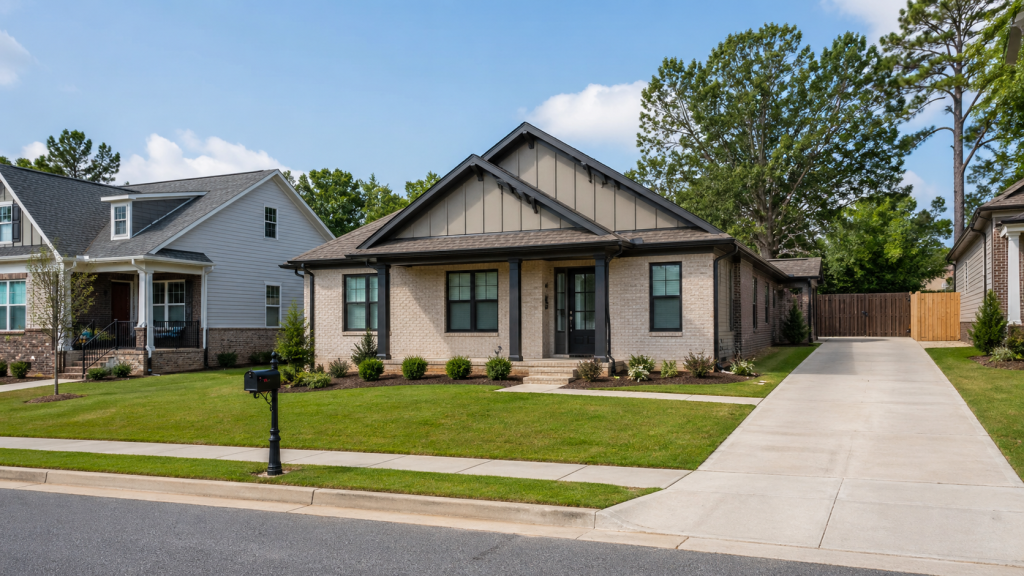
But “Huntsville” is not one single rental market. A house in Madison, a duplex in an established Huntsville neighborhood, a townhome near Research Park, a new construction property in Limestone County, and an older home in South Huntsville can attract different renters, carry different costs, and perform very differently.
Huntsville Is a Market of Submarkets
Many out-of-area investors start too broadly. They search “Huntsville rental property” and assume every area follows the same rules. That is a mistake.
The Huntsville metro includes several distinct areas, including:
| Area | What Investors Should Consider |
|---|---|
| Huntsville city limits | Close to job centers, entertainment, older neighborhoods, infill opportunities, and varied school zones |
| Madison | Strong renter demand, higher entry prices, school zone sensitivity, commute access to Research Park and Redstone |
| Athens and Limestone County | Growth area with new construction, but commute patterns and tenant pool must be checked carefully |
| Owens Cross Roads and Hampton Cove | Popular for space, newer homes, and lifestyle appeal, but commute time matters |
| Harvest, Monrovia, and Meridianville | Suburban growth areas with varying access, lot sizes, and school assignments |
| South Huntsville | Established neighborhoods, access to Redstone, mature housing stock, and renovation considerations |
| Downtown and central Huntsville | Potential demand from professionals, medical workers, service workers, and renters who value walkability or convenience |
A smart investment search starts with the likely tenant, not just the price point.
Know Who Your Tenant Is Before You Buy
The best rental property for one tenant group may be the wrong property for another.
In the Huntsville area, common renter profiles include:
- Defense contractors and Redstone Arsenal employees
- Engineers and technology workers near Research Park
- Relocating families testing the area before buying
- Healthcare workers
- Military-connected households
- Young professionals wanting access to Downtown Huntsville, MidCity, Bridge Street, or Town Madison
- Service workers and local employees who need practical access to job centers
- Tenants who need convenient access to I-565, Memorial Parkway, Highway 72, or Research Park Boulevard
Each group values different things. A contractor working near Gate 9 may care more about commute time than backyard size. A family relocating to Madison County may focus heavily on school zoning. A young professional may prefer convenience to restaurants, shopping, and entertainment. A duplex tenant may care most about affordability, parking, privacy, and a clean, well-managed property.
Do not buy the property first and then guess who will rent it. Define the tenant first, then evaluate the property.
Commute Patterns Matter More Than Distance on a Map
Out-of-state investors often look at mileage and miss drive-time reality.
A home that appears “only 15 minutes from Redstone Arsenal” may perform differently depending on traffic, gate access, construction, school traffic, and time of day. Huntsville’s major employment centers are not all in one location. Redstone Arsenal, Cummings Research Park, Downtown Huntsville, Huntsville Hospital, Mazda Toyota Manufacturing, and Madison-area employers create different traffic patterns.
Pay close attention to access to:
- I-565
- Research Park Boulevard
- Memorial Parkway
- Highway 72
- Madison Boulevard
- Zierdt Road
- County Line Road
- Winchester Road
For many renters, convenience is not just about distance. It is about how predictable the commute feels Monday through Friday.
School Zones Can Affect Rental Demand
Even investors who do not personally care about schools need to understand school zoning. Many renters do.
In North Alabama, school assignments can change from one side of a street to another, especially around city and county boundaries. Huntsville City, Madison City, Madison County, Limestone County, and other systems may all come into play depending on the property.
Before buying, confirm:
- The exact school system
- Elementary, middle, and high school assignment
- Whether the property is inside city limits
- Whether zoning changes are under discussion
- Whether the listed school information matches official mapping tools
This matters for rentability, resale, and tenant retention.
Property Type Changes the Investment Strategy
Not every rental property in Huntsville should be evaluated the same way. A single-family home, duplex, fourplex, townhome, new construction home, and older property can all be good investments, but they come with different risks, expenses, financing considerations, and tenant expectations.
Single-Family Homes
Single-family homes are often attractive for longer-term tenants, especially relocating families, military-connected households, and professionals who want space. They may offer better tenant retention, but they also come with higher maintenance responsibility.
Investors should look closely at roof age, HVAC condition, plumbing, drainage, fencing, appliances, flooring, and neighborhood rental competition.
A single-family home may be a strong fit when the goal is stable occupancy, lower tenant turnover, and broader resale appeal.
Duplexes, Triplexes, and Fourplexes
Small multifamily properties can be a strong fit for Huntsville investors who want more than one income stream without moving into larger apartment ownership. Duplexes, triplexes, and fourplexes may offer better income diversity than a single-family home because one vacancy does not always mean the entire property stops producing rent.
These properties can work well near job centers, established neighborhoods, Downtown Huntsville, South Huntsville, North Huntsville, Madison, and areas with convenient access to Redstone Arsenal, Research Park, I-565, and major commuter routes.
However, small multifamily properties require careful review. Investors should look closely at:
- Separate utility meters
- Parking availability
- Roof, HVAC, plumbing, and electrical condition
- Tenant turnover history
- Current lease terms
- Actual rent versus market rent
- Expense history
- Trash, lawn care, and shared maintenance responsibilities
- Zoning and legal use
- Financing requirements
- Fire separation, safety requirements, and code compliance
- Noise transfer between units
Do not assume every duplex or fourplex is automatically a better investment than a single-family home. A well-located single-family rental may outperform a poorly maintained multifamily property with below-market rents, tenant issues, or expensive deferred maintenance.
For out-of-state investors, small multifamily properties can be appealing because they may create stronger cash flow. The tradeoff is that they usually require more management, more detailed inspections, and a clearer plan for tenant relations, maintenance, and reserves.
Townhomes
Townhomes can work well for low-maintenance rental demand, especially near Research Park, Madison, Providence, Bridge Street, and Town Madison. They may appeal to professionals who want convenience without a large yard.
Review HOA rules carefully. Some communities restrict rentals, limit lease terms, or have approval requirements.
Townhomes may also have HOA fees that affect cash flow. Investors should compare the monthly fee against what the HOA actually covers, such as exterior maintenance, roof coverage, landscaping, common areas, or insurance components.
New Construction
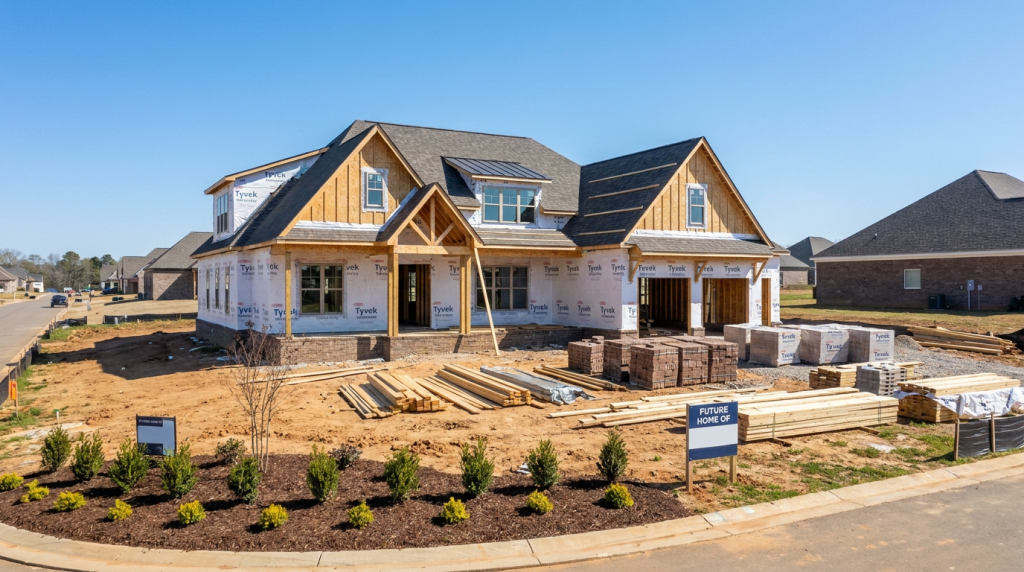
New construction is popular with out-of-state investors because it feels simple. Newer systems, modern layouts, and fewer immediate repairs are appealing.
But new construction is not automatically a better investment. Investors should compare builder incentives, property taxes after reassessment, HOA dues, rental competition, and whether the area has enough current tenant demand to support the projected rent.
This is especially important in fast-growing parts of Huntsville, Madison, Athens, Harvest, Monrovia, and Limestone County where several similar homes may be available at the same time.
Older Homes
Older homes in established areas can offer strong locations and larger lots, but maintenance can surprise inexperienced investors. South Huntsville, central Huntsville, and other mature neighborhoods may offer good rental appeal, but inspections matter.
Pay attention to electrical systems, foundation, crawlspace condition, sewer lines, windows, insulation, drainage, and HVAC age.
Older homes can work well when the location is strong and the property has been maintained. They become riskier when the purchase price does not leave enough room for repairs and reserves.
Compare Property Types Before You Choose
A simple side-by-side review can help out-of-state investors avoid choosing a property type only because it looks good online.
| Property Type | Potential Strength | Key Risk to Review |
|---|---|---|
| Single-family home | Broad tenant appeal and resale flexibility | Higher cost when vacant because there is only one rent stream |
| Duplex, triplex, or fourplex | Multiple income streams and possible stronger cash flow | More management, tenant turnover, shared systems, and maintenance complexity |
| Townhome | Lower yard maintenance and appeal to convenience-focused renters | HOA dues and rental restrictions |
| New construction | Modern layout and fewer immediate repairs | Builder competition, reassessed taxes, and uncertain rental depth |
| Older home | Established location and potential value | Deferred maintenance and inspection surprises |
The right property type depends on your goals. Cash flow, appreciation, maintenance tolerance, financing, and management style should all shape the decision.
Do Not Rely Only on National Rent Estimates
Online rent estimates can be useful as a starting point, but they are not a substitute for local rental analysis.
Two homes with the same square footage can command different rents because of:
- School zone
- Commute convenience
- Garage count
- Yard size
- Floor plan
- Age and finish level
- Pet policy
- Neighborhood reputation
- Proximity to employment centers
- Competing rentals nearby
- Whether the property is a single-family home or a multifamily unit
- Parking and laundry setup
- Utility structure
A strong rent analysis should compare active rentals, recently leased properties, days on market, tenant profile, and seasonal demand.
For duplexes and fourplexes, investors should also review whether current rents are truly market rents. A property may look profitable on paper because tenants have been in place for years, or it may look underperforming because rents have not been adjusted. Either way, lease terms and tenant history matter.
Watch the Full Monthly Cost, Not Just the Purchase Price
A property can look profitable until all ownership costs are included.
Out-of-state investors should calculate:
- Mortgage payment
- Property taxes
- Insurance
- HOA dues
- Property management
- Vacancy allowance
- Maintenance reserve
- Leasing fees
- Utilities during vacancy
- Pest control
- Lawn care, if included
- Capital expenses
- Turnover costs
- Common area maintenance for multifamily properties
In Alabama, property taxes may look lower than in many other states, but that does not mean every property cash flows. Insurance, maintenance, HOA dues, management, vacancy, and realistic rent matter just as much.
Small multifamily investors should be especially careful with expenses. A duplex or fourplex may include shared water, exterior lighting, common lawn care, pest control, trash service, or other costs that reduce net income.
HOA Rules Can Make or Break the Plan
Many Huntsville-area subdivisions have homeowners associations. This is especially common in newer communities in Madison, Limestone County, Owens Cross Roads, Hampton Cove, Harvest, and Monrovia.
Before buying, review the HOA documents for:
- Rental restrictions
- Minimum lease terms
- Tenant registration requirements
- Parking rules
- Pet restrictions
- Exterior maintenance rules
- Fencing rules
- Short-term rental restrictions
Do not assume a property can be rented just because it is listed for sale. Verify the rules before the inspection period ends.
Zoning and Legal Use Matter for Multifamily Properties
For duplexes, triplexes, and fourplexes, legal use matters. A property may physically appear to have multiple units, but investors still need to verify whether the current use is allowed.
Before buying a small multifamily property, confirm:
- The property is legally zoned for its current use
- The number of units is recognized by the appropriate local authority
- Each unit has safe access and proper egress
- Any added unit was permitted
- Utility setup matches the rental structure
- Parking is adequate
- Fire and safety requirements are understood
- Current leases match the actual units being purchased
This is especially important with older properties or converted homes. A property that looks like a duplex online may not be legally approved as one. That can create problems with financing, insurance, appraisal, resale, and tenant occupancy.
Short-Term Rentals Are a Different Business
Some investors hear about Huntsville tourism, events, sports, Redstone Arsenal travel, and business demand and immediately think about short-term rentals.
That strategy requires deeper research.
Short-term rental performance depends on location, furnishing costs, local rules, occupancy, cleaning, management, guest turnover, and competition. A property that works as a long-term rental may not work as a short-term rental.
For most out-of-state investors, a stable long-term rental is usually easier to manage than a hospitality-style business.
New Growth Does Not Guarantee Immediate Cash Flow
Huntsville’s growth is real, but investors still need discipline.
Growth can create opportunity, but it can also create competition. In areas with heavy new construction, multiple similar rentals may hit the market at the same time. That can affect rent, vacancy, and leasing speed.
Ask these questions before buying in a fast-growing area:
- How many similar rentals are nearby?
- Are builders still selling the same floor plan?
- Will tenants choose your rental over a brand-new builder home?
- Is the area already established or still developing?
- Are roads, retail, schools, and services keeping pace?
- Will the commute still feel convenient during peak hours?
Growth is a tailwind. It is not a substitute for due diligence.
The Best Huntsville Investment Properties Usually Share These Traits
Strong rental properties in Huntsville usually have a clear tenant match, practical location, and manageable ownership costs.
Look for properties with:
- Convenient access to major job centers
- A realistic rent-to-cost relationship
- Functional floor plans
- Durable finishes
- Good parking
- Manageable yard maintenance
- Strong inspection results
- Clear HOA rental rules, when applicable
- Verified school zoning
- Confirmed zoning and legal use for multifamily properties
- Limited surprise expenses
- Competitive condition compared with nearby rentals
- A property management plan that fits the asset type
The goal is not to buy the cheapest house or the highest advertised cap rate. The goal is to buy a property that qualified tenants will choose and that the owner can manage responsibly from out of state.
Questions Out-of-State Investors Should Ask Before Making an Offer
Before writing an offer, ask:
- Who is the likely tenant for this property?
- What employment centers does this location serve?
- What is the real commute during peak traffic?
- What school zone is the home actually in?
- Are there HOA rental restrictions?
- What are similar rentals actually leasing for?
- How long are comparable rentals sitting vacant?
- What repairs are likely in the next three years?
- Is this area mostly owner-occupied, rental-heavy, or mixed?
- Will this property still be competitive if more rentals hit the market?
- If it is multifamily, are all units legal and properly recognized?
- Are utilities separately metered or shared?
- Are current leases, deposits, and rent rolls accurate?
- Does the property need more management than I expected?
These questions help investors avoid buying based on excitement instead of numbers.
Work With Local Eyes Before You Buy
Out-of-state investing works best when the buyer has reliable local guidance. Photos, listing remarks, and national data do not always show drainage issues, awkward locations, traffic concerns, school boundary confusion, property condition concerns, or neighborhood-by-neighborhood differences.
This is even more important with small multifamily properties. A duplex or fourplex may look strong online, but local review can help uncover parking limitations, deferred maintenance, tenant concerns, awkward layouts, or rental assumptions that do not match the market.
A good local review should help you understand:
- Whether the rent projection is realistic
- Whether the area matches your tenant profile
- Whether the property has resale appeal
- Whether the inspection concerns are normal or serious
- Whether the price makes sense for the specific submarket
- Whether the property fits your risk tolerance
- Whether the management plan matches the property type
Huntsville can be a strong market for real estate investors, but the best opportunities usually come from local knowledge, careful numbers, and a clear rental strategy.
Before buying, slow down, study the submarket, verify the details, and make sure the property works for the tenant you actually want to attract.
If you are considering an investment property in Huntsville, Madison, Athens, or the surrounding North Alabama market, start with a local property review before you write the offer. It can help you avoid costly assumptions and focus on properties that match your goals.
FAQ
Is Huntsville a good market for out-of-state real estate investors?
Huntsville can be a good market for out-of-state investors, especially because of its employment base, relocation activity, and regional growth. However, performance depends heavily on location, property type, rent accuracy, condition, management, and purchase price.
What areas near Huntsville are popular with rental property investors?
Common areas investors evaluate include Huntsville, Madison, Athens, Harvest, Monrovia, Meridianville, Owens Cross Roads, Hampton Cove, and parts of Limestone and Madison counties. Each area has different pricing, tenant demand, commute patterns, and school considerations.
Are duplexes and fourplexes good investments in Huntsville?
Duplexes, triplexes, and fourplexes can be good investments when the location, rents, condition, zoning, and expenses make sense. They may offer multiple income streams, but they usually require more management and closer review than a single-family rental.
What should I check before buying a duplex or fourplex?
Verify legal use, zoning, lease terms, rent roll accuracy, utility setup, parking, insurance, inspection results, tenant deposits, and shared maintenance responsibilities. Do not rely only on the listing description.
Should investors buy new construction in Huntsville?
New construction can be a good fit, but it should not be purchased blindly. Investors need to compare rent demand, builder competition, HOA rules, taxes, insurance, and long-term maintenance costs.
Are school zones important for rental properties?
Yes. School zones can affect tenant demand, rentability, and resale value. Investors should verify school assignments through official maps instead of relying only on listing information.
Do Huntsville rentals work better as long-term or short-term rentals?
Long-term rentals are often simpler for out-of-state investors. Short-term rentals require more active management, furnishings, local rule review, cleaning coordination, and hospitality-style operations.
Have a question about the Huntsville housing market?
Get straight, local answers about selling, buying, relocating, investing, or building in the Huntsville area. No pressure.
Since 2005 · 500+ Families Served · 250+ Five-Star Reviews · BBB A+ Rated
About Steve Stinson
Steve Stinson is a REALTOR® and Broker Associate with Keller Williams Realty in Huntsville, Alabama. He has served buyers and sellers across Madison County since 2005.
Steve specializes in getting sellers the best result, with particular strength in new construction homes, relocation, downsizing, and buying or selling investment properties. He works with clients in Huntsville, Madison, Hampton Cove, Owens Cross Roads, and the surrounding North Alabama area, and helps owners weigh open-market sales against local cash-buyer offers so they can compare speed, price, and terms with confidence.
He has helped more than 500 families make A Wise Move and earned 250+ five-star reviews. Steve is a Best of Zillow award recipient and consistently ranks in the top 5% of the local MLS as a listing agent. A lifelong Alabamian and 40-plus-year resident of the area, he brings deep local knowledge and pricing strategy to every move, whether you’re navigating a seller’s market or deciding how to compete for a home in a hot one.