
Seller Repairs Before Closing: Do Alabama Sellers Have to Make Repairs After a Home Inspection?
Alabama sellers are not automatically required to make repairs after a buyer’s inspection. The buyer may request repairs, credits, or a price change, but the contract, contingency deadlines, and financing requirements determine whether the buyer can cancel or the loan can close.
By Steve Stinson | July 10, 2026
Introduction: What Alabama Home Sellers Need to Know About Repairs After Inspection
Are you selling a home in Alabama and wondering what repairs you might be required to make before closing, especially after a buyer’s inspection? This guide is for Alabama home sellers who want to understand their obligations, avoid costly surprises, and ensure a smooth, successful home sale. Knowing exactly what you are responsible for—and what you can negotiate or refuse—can make the difference between a deal that closes on time and one that falls apart. We’ll clarify which repairs sellers may have to make before closing, how inspection and financing requirements affect your options, and why understanding these obligations is crucial for protecting your bottom line and keeping your sale on track.
You Don’t Have to Fix Everything
An inspection report is just that – a report. It’s not a repair order. The buyer can ask you to fix things, give you a credit, lower the price, or suggest something else, but you don’t have to do it. You can agree to fix it, refuse, or come up with a different solution.
The Role of the Purchase Contract
The thing that really matters here is the purchase contract. If the buyer is still under an inspection contingency and you can’t come to an agreement, then the buyer may have the right to back out. Whether you get your earnest money back is a whole other story because it is typically held in an escrow account during the transaction, and whether that escrow money is returned depends on the contract language, why the buyer wants out, and whether they met all their deadlines.
Financing and Lender Requirements
Financing can also be a factor. Some lenders like FHA, VA, and some conventional loans may require certain items on the inspection report to be fixed before the loan will close. Understanding how VA loan offers actually work for Huntsville home sellers can help you decide which repair requests really matter for that type of buyer. Some of those are mandatory repairs tied to safety hazards or code violations, not just buyer preferences. This doesn’t mean you as the seller are personally required to fix it under Alabama law. It’s just that the transaction won’t close with that financing unless the issue gets fixed in a way that the lender is happy with.
Treat Repairs as a Negotiation
Treat it like a negotiation, not a demand. You want to protect your sale without giving away more than you have to.
Be Careful with Known Defects and Disclosure
In Alabama, we generally follow the old rule that buyers beware when it comes to the resale of existing homes. That doesn’t mean you can just cover up a defect or misrepresent the property.
When Disclosure Is Required
There can be exceptions if:
- A buyer specifically asks a question about something
- A fiduciary duty is involved
- Other specific circumstances apply
Once something significant comes up, talk to your agent and, if needed, get legal advice from an Alabama real estate attorney. Keep your responses accurate and in writing.
Want some more on this? Check out what Alabama home sellers have to disclose.
Schedule Your 20-Minute Strategy Call
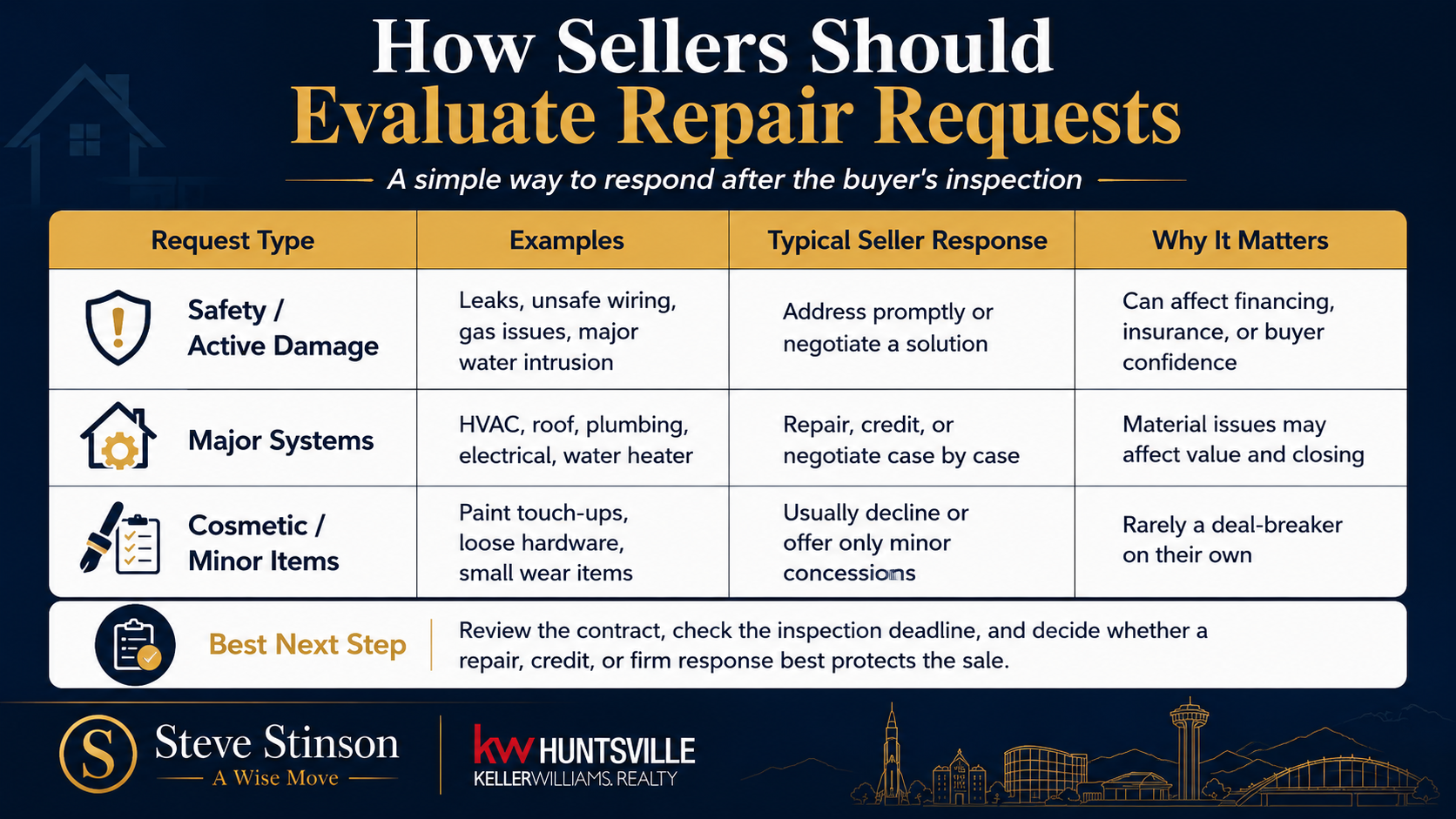
Sort Every Request into Three Buckets
A long inspection report is a lot easier to deal with if you break it down into three groups.
Safety, Health and Active-Damage Items
These are things like active leaks, electrical issues that aren’t safe, gas leaks, ongoing water damage, electrical problems that create safety issues such as exposed wiring and fire hazards, structural damage tied to foundation issues or trouble in crawl spaces, septic system failures, or other serious inspection findings that could make the house uninhabitable.
Any safety or health concern, including a health concern like termites or mold, is the kind of problem most likely to derail financing or insurance.
These need to be fixed ASAP because they can affect the buyer’s confidence, insurance, appraisal, or financing. Lender-driven inspection repairs or home inspection repairs often include making sure smoke and carbon monoxide detectors work, VA-required heating systems are safe and functional, peeling paint in pre-1978 homes is corrected, and termite damage or active pest infestations are addressed since pest infestations can lead to serious structural problems. If you’re not fixing these things, you can expect to lose the deal, and when inspection findings point to foundation movement or similar structural integrity concerns, specialist reports are often needed before complete repairs are agreed.
Major Systems and Functional Items
Examples of these kinds of things are the common repairs that often come up in a thorough inspection, such as aging roofs, older electrical systems with non-urgent concerns, air conditioning problems, broken windows or doors that affect security and energy efficiency, an older water heater, and other functional items that still matter even when they are not immediate hazards. Sellers also frequently address roofing issues that could lead to future damage.
These specific repairs are negotiable because several factors matter, including remaining serviceable life and likely repair costs. You can fix them, give the buyer a credit, adjust the price, or try to decline. The buyer might want to fix these things, so be open to negotiation.
Minor Maintenance and Cosmetic Items
Things like cracked switch plates, loose doorknobs, small drywall blemishes, and chipped paint are usually minor repairs or minor issues rather than serious defects, and many are simply cosmetic issues that typically do not justify major concessions.
Most of the time, you can get away with saying no to these—unless fixing a few small issues will help keep the rest of the transaction intact.
It’s not the length of the inspection report that is the problem. It’s the seriousness of the issues, how expensive they are, whether they affect financing, and how negotiable they are, which is the same way you should think about whether to sell your house as-is or fix it up first in Alabama.
Should You Give the Buyer a Credit or Fix It Yourself?
A credit toward the buyer’s closing costs can be a pretty slick way out of having to fix everything. But it’s not the best answer in every case.
Advantages of a Repair Credit
- It’s a fixed cost: You know exactly how much you are going to pay for it.
- Many buyers prefer to use their own contractor after closing: This way you avoid arguments about the seller’s repair vendor, workmanship, or materials.
- The closing process stays clean and simple: You are less likely to run into contractor delays and other headaches.
However, a credit has to fit in with the buyer’s loan program, their closing cost limits, and the lender’s requirements. A credit may not be enough to fix a problem that the lender wants fixed. Some buyers ask for a price reduction or a credit instead of having the seller do all the repairs.
When to Choose Repairs Over Credits
Your agent should talk to the buyer’s lender and closing attorney before you sign any agreement. Repairs tend to be a better bet when the lender is sitting on the lender, the problem needs to be stalled right away, or fixing the issue is the best way to keep the sale on track.
If you agree to do the work, make sure the agreed-upon repairs are documented in a repair addendum that spells out the scope, contractor standards, permits, timelines, and re-inspection terms.
For a bit more detail on how repair choices and credits affect your bottom line, and how to estimate closing costs and fees, check out what you will actually net when you sell a home in Huntsville along with Seller Concessions in Alabama.
Using the Leverage You Really Have
Your negotiation hand depends heavily on market conditions:
- In a buyer’s market, purchasers usually have more leverage.
- In a seller’s market, owners can often hold firmer on repairs.
Other factors include:
- The property in question
- The price tag
- The condition
- What the buyers are looking for
- How many other places are on the market
- How strong the offer is
- If there’s another buyer waiting in the wings
All of this ties into the broader Huntsville real estate market trends and expert tips that shape how buyers behave.
Why Pricing and Market Timing Matter
A house that’s priced just right and move-in ready with a good amount of interest behind it can usually weather a storm better than a place that’s been sitting on the market for a bit before getting a paltry offer. That’s why pricing your home correctly to sell in Huntsville is such a big part of how tough you can be on repair negotiations. And a seller who is already coughing up a lot of concessions might respond a little differently than one whose buyer is coming in with clean terms.
- In a hot seller’s market, other buyers can make sellers less flexible on repair requests.
- In contrast, negotiating repairs and inspection negotiations usually become more buyer-friendly in a buyer’s market.
Four Key Questions to Ask Before Responding
Before you respond, ask yourself these four straightforward questions:
- Is this request tied to something life or death, like safety, damage, insurance, an appraisal, or financing?
- What does the contract let the buyer do, and by when is the deadline?
- What’s it going to cost to keep this buyer on the hook versus finding a new buyer and going back out on to the market?
- Would this issue have to be brought up or addressed with a future buyer if this contract falls through, especially if the same issues come up with the next buyer?
Good Documentation Makes Your Response Smoother
Receipts, warranties, permits, service records, the home inspection report, and what the contractor says are all going to help clear up any misunderstandings.
If the HVAC was serviced recently, the roof was fixed, or the water heater is newer than the buyer thinks, go ahead and provide the documentation.
When the inspector tells you to get a specialist in, a contractor who knows what they’re talking about and is willing to put it in writing can be way more valuable than arguing over what the inspector actually said.
Be specific in your response to repair requests, and refer to the exact items in the report instead of making vague promises.
Having good documentation keeps things fact-based and helps both parties make a decision, and the same paper trail can be crucial if you later have to deal with a low appraisal on your Huntsville home sale after repairs or credits have been negotiated.
Respond Clearly, in Writing, and on Time
Give a straight answer to the buyer’s repair requests – accept what you will, reject what you won’t, and if there are any remaining issues, offer a credit or an alternative.
Keep your answer flat and factual. Say what you will do, what you won’t do, and if there are any limits or documentation requirements.
Don’t go ahead and authorize work or promise money on the fly. The final agreement should be written, signed, and fit the overall real estate transaction, with the lender and closing attorney coordinated when they need to be.
Sometimes a small concession will keep a sale alive, and sometimes the buyer is just trying to renegotiate over and over.
A good real estate agent helps keep responses organized, realistic, and on schedule.
The right answer to give is one that takes into account the cost, risk, contract, and the chances of closing – not how frustrated you are. This is even more important if you’re selling a house during a divorce in Alabama where court orders and timelines can limit how you respond to repair requests.
A Seller’s Guide to Handling Repair Requests
- Look at the repair request and inspection deadline first thing.
- Split the requests into lender-required or safety-related items after reviewing the inspection report, and separate those from anything cosmetic or otherwise negotiable.
- Estimate the likely repair costs and risk of each item that really matters, keeping costly repairs distinct from smaller requests.
- Check if a credit is allowed under the buyer’s financing instead of agreeing to complete repairs prior to closing.
- Compare the cost of agreeing to do it with the risk of losing the buyer and going back out on the market.
- While you work through the requests, remember the seller is still fully responsible for keeping the home in good, maintained condition during escrow, and it helps to understand what your home is really worth in Huntsville so you can weigh repair costs against your likely sale price.
- Write one clear and concise counterproposal with terms and deadlines.
Frequently Asked Questions
What Repairs do Alabama Sellers have to Make after a Home Inspection Report?
Short answer: Alabama law doesn’t require a seller to fix every single thing the home inspector finds. Sellers do not have to make all requested repairs, but lender-driven or contract-based mandatory repairs can still matter. What has to happen is determined by the signed contract, the inspection contingency, the financing requirements, and what you and the buyer agreed to.
Can a Buyer Cancel if I Don’t Make Repairs?
Maybe. If the contract gives the buyer that right under a home inspection contingency, the buyer can if they act within the inspection period and follow the contract procedure.
Earnest money treatment is also going to depend on the contract and timing.
Is a Repair Credit Better than Just Doing the Work?
Sometimes, but not always. A credit can help get rid of the seller’s hassle and let the buyer get to work on fixing it themselves. But it has to be approved by the buyer’s financing, and it may not satisfy a lender-required repair that has to be done before closing.
What if the Buyer’s Repair List is Unreasonable?
Respond selectively to unreasonable repair requests, and separate true safety concerns from cosmetic demands by focusing on issues that affect safety, active damage, financing, or the transaction value.
Minor issues usually should not sink an otherwise workable deal.
Decline the cosmetic or unreasonable ones and only offer a limited alternative when it helps keep a worthwhile sale alive.
Do FHA and VA Buyers Require More Repairs?
FHA and VA financing has property-condition standards, so an appraisal might identify some issues that have to be taken care of before the loan closes, including health or safety concerns, structural problems, and sometimes building code violations. Those requirements are separate from the buyer’s general home inspection request, so make sure to check with the lender. These standards are meant to protect both the buyer and the lender, especially where health, safety, or structural soundness is involved.
Could a Pre-Listing Inspection Reduce Repair Negotiations?
Yes. A pre-listing inspection can be a real blessing – it helps you avoid surprises, shows you what’s up early on, gives you time to get estimates, and puts you in a good position to make accurate pricing and disclosure decisions.
The buyers may still go ahead and have their own inspection and request some extra work.
Should I Repair an Item that May Affect a Future Buyer?
Think about it carefully. If the contract falls through, a material issue might cause some problems with disclosure, pricing, financing, insurance, and future negotiations, especially if you’re trying to sell an inherited house in Alabama where multiple heirs and probate can already complicate repairs and credits.
It might be cheaper to fix it now rather than dealing with the same problem with the next buyer.
Schedule Your 20-Minute Strategy Call
The Bottom Line
A buyer’s inspection report doesn’t have to be a nightmare for an Alabama seller – it doesn’t automatically force you into making repairs.
Your best bet is to stick to the contract, pinpoint the real deal-breakers that could affect the property or financing, weigh the cost of a compromise against the risk of losing the whole sale as closing timelines move, and get any agreements down in writing.
A repair request is usually just a minor bump in the road, a manageable negotiation that needs some finesse – not a potential deal killer. If you’re also planning a move to a smaller place, you can fold those decisions into a broader step-by-step downsizing plan in Huntsville. What’s in your best interest depends on the contract, your market leverage, financing limits, and repair costs in that specific transaction. Deals with home builders can work differently, because new construction inspection rights are often handled in the builder contract instead of the usual contingency structure. Timing matters too, since delays over repairs can affect financing milestones like a buyer’s rate lock.
If you’re in the middle of haggling over repairs right now, or you just want to get a plan in place before you put your Huntsville-area home on the market, then grab a 20 minute slot on my calendar – a free strategy call with me – and you’ll get no-nonsense advice on your options, your leverage & what to do next.
Have a question about the Huntsville housing market?
Get straight, local answers about selling, buying, relocating, investing, or building in the Huntsville area. No pressure.
Since 2005 · 500+ Families Served · 250+ Five-Star Reviews · BBB A+ Rated
About Steve Stinson
Steve Stinson is a REALTOR® and Broker Associate with Keller Williams Realty in Huntsville, Alabama. He has served buyers and sellers across Madison County since 2005.
Steve specializes in getting sellers the best result, with particular strength in new construction homes, relocation, downsizing, and buying or selling investment properties. He works with clients in Huntsville, Madison, Hampton Cove, Owens Cross Roads, and the surrounding North Alabama area, and helps owners weigh open-market sales against local cash-buyer offers so they can compare speed, price, and terms with confidence.
He has helped more than 500 families make A Wise Move and earned 250+ five-star reviews. Steve is a Best of Zillow award recipient and consistently ranks in the top 5% of the local MLS as a listing agent. A lifelong Alabamian and 40-plus-year resident of the area, he brings deep local knowledge and pricing strategy to every move, whether you’re navigating a seller’s market or deciding how to compete for a home in a hot one.