
How Do You Buy and Sell a House at the Same Time in Huntsville?
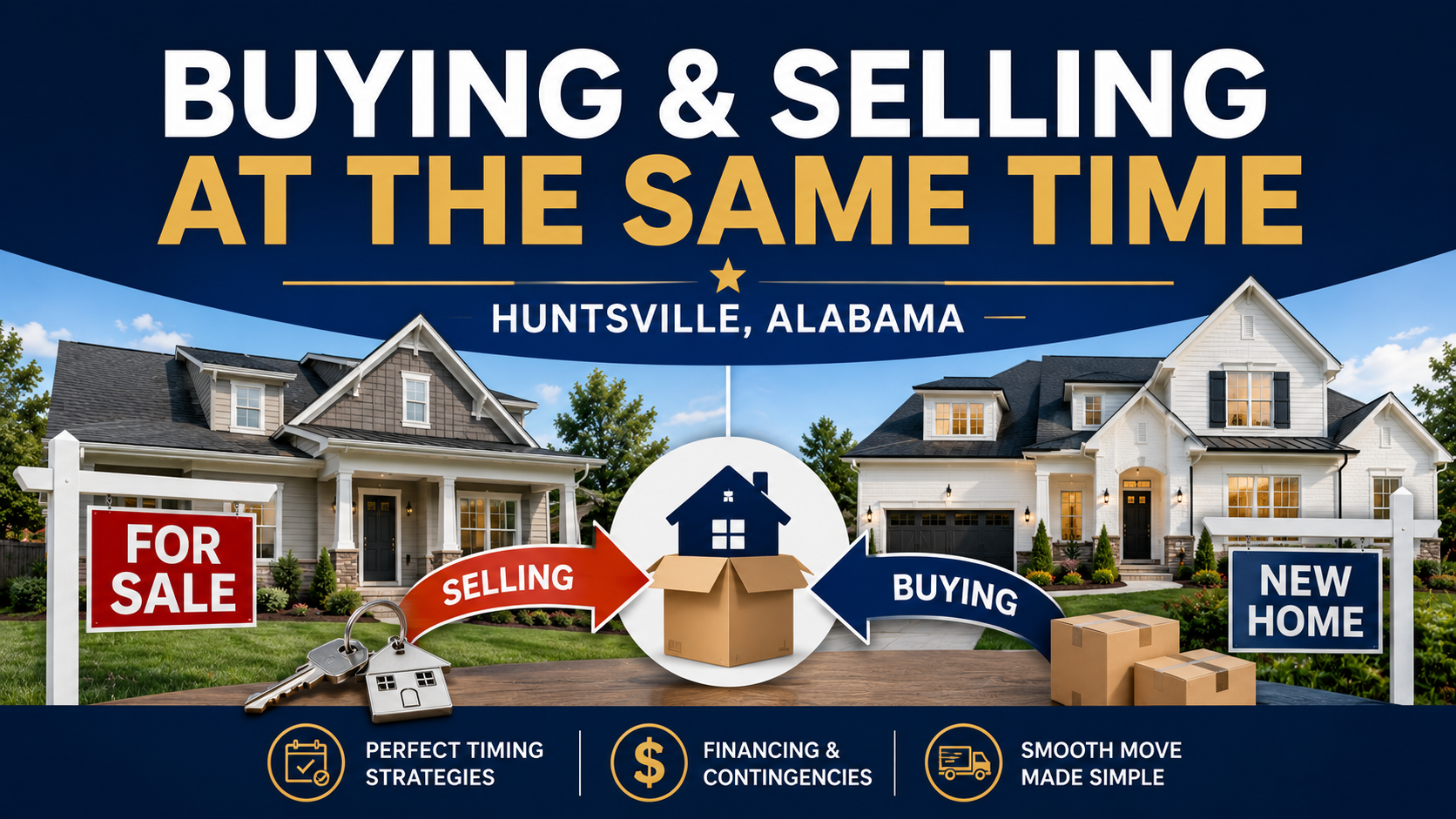
Buying and selling a house at the same time usually means choosing one of three paths: sell first, buy first, or coordinate both closings. For many Huntsville homeowners with equity, selling first and creating some extra time before moving is the lower-risk approach because you know your proceeds and reduce the chance of carrying two mortgages.
Buying and selling a house at the same time is a challenge many Huntsville homeowners face when considering a move. This article is designed for Huntsville homeowners who are planning to transition from one home to another and want to avoid the financial and logistical pitfalls that can arise during the process. We’ll cover the main strategies for buying and selling a house at the same time, the key risks involved, and practical solutions to help you navigate both transactions smoothly. Understanding these options is crucial to prevent costly mistakes, reduce stress, and ensure a seamless move.
Why Buying and Selling at the Same Time Matters
Buying and selling a home at the same time involves coordinating two complex transactions—each with its own timeline, requirements, and potential for delays. If the timing doesn’t align perfectly, you could end up with two mortgages or, worse, no place to live for a period. That’s why it’s essential to have a backup plan for temporary housing and to build a timing cushion into your plans. Having a backup plan for housing reduces stress during the transition and ensures you’re prepared if one closing is delayed.
What Makes This Process Stressful?
The most stressful part of buying and selling a house at the same time is not just about the properties themselves, but about managing the risks of timing and finances. The main question homeowners ask is, “If I sell, where do we actually go?” You don’t want to feel rushed into your next purchase, nor do you want to carry two mortgages for months. The core risks are:
- Needing temporary housing if your next home isn’t ready
- Carrying two homes and two mortgages if you buy first
- The uncertainty of coordinating two closings on the same day
Both problems can be managed, but the first decision is figuring out which risk bothers you more: temporary housing and timing, or carrying two homes. Always have a temporary housing backup plan ready in case the closing dates do not align perfectly.
What Are the Three Ways to Buy and Sell a House at the Same Time?
You can sell your current home first, buy the next home first, or put both under contract and coordinate the closing dates. Each path has its own advantages and risks:
Sell First, Then Buy
This is usually the first option to consider when a homeowner has good equity. You know what the house actually sold for, you know what you will net, and you are not trying to estimate your next down payment while the current home is still unsold. The downside is timing. If the next home is not ready when yours closes, you need more time in the current home or a short-term place to stay.
Buy First, Then Sell
This takes the housing question off the table. You already know where you are going. But now the pressure moves to the financial side because you may have to qualify while you still own the current home and carry both properties for a while. If that would make the monthly budget tight, I would not build the plan around everything going perfectly.
Coordinate Both Closings
This is the version most people hope for: sell one home, buy the other, and move once. It can work, but don’t treat a same-day closing as a guarantee. In Alabama, closings are handled by real estate attorneys, and a delay with a lender, appraisal, inspection issue, VA loan requirements and appraisal standards, or closing document on one side can affect the other transaction.
| Path | What you gain | Main concern | Often fits |
|---|---|---|---|
| Sell first | Clear proceeds and less financial overlap | You may need extra time before moving | Homeowners with solid equity |
| Buy first | You know where you are moving | Two-home carrying costs | Strong reserves and borrowing capacity |
| Coordinate both | Potentially one move | One delay can affect both closings | Flexible contracts and careful timing |
Once you understand the main options, the next step is to consider how to bridge any timing or financial gaps between transactions.
What Can Help Cover the Gap Between Selling and Buying?
A variety of tools can help you manage the gap between selling your current home and buying your next one. The important part is matching the tool to the actual problem. Some give you time, some give you access to money, and some protect you from having to close on the next home before the current one sells.
You may not need anything complicated. Sometimes a little more time in the contract solves most of the problem.
Rent-Back Agreement
A rent-back agreement allows sellers to stay in the home temporarily after closing. You sell the home and stay for an agreed period after closing. This can be a good way to sell first without immediately moving twice. The buyer’s financing, insurance, and occupancy requirements still have to work with the arrangement.
Extended Closing
You negotiate a longer period before the sale closes. If you only need a few extra weeks to get the next home under contract, this can be simpler than adding another loan.
Home Sale Contingency
A home sale contingency allows you to back out if your home doesn’t sell. Your purchase depends on selling your current home. That protects you from closing on the next home too early, and coordination is often easier when the same agent is managing both the sale and the purchase. However, it can make your offer less attractive when the seller is comparing it with an offer that has no sale contingency.
HELOC
A HELOC (Home Equity Line of Credit) allows borrowing against your home’s equity. It can give you access to equity in your current home before it sells. If this may be part of your plan, talk with the lender before listing. The timing can matter.
Bridge Loan
A bridge loan is a short-term loan for down payments. It can help cover a down payment until your old home sells. It can solve a real problem, but the cost and qualification standards vary. I would want to know the full cost before depending on it.
After you’ve explored these tools, the next step is to decide whether selling first or buying first is the better fit for your situation.
Should You Sell First or Buy First in Huntsville?
For many Huntsville homeowners with equity, I would start by seeing whether selling first can work. It gives you a real number for your proceeds and usually makes the next purchase easier to plan. The best path also depends on your financial situation and risk tolerance. Buying first can still make sense when you have enough reserves to carry both homes comfortably or when you find a home that would be hard to replace.
The word I would focus on there is comfortably.
Being able to qualify for two homes is not the same as wanting to carry both for several months. Before buying first, I would want the lender to run the numbers and I would want a realistic estimate of how long the current home might take to sell. The local housing market matters here because a buyer’s market has more homes than buyers, while a seller’s market has more buyers than homes available. Understanding current Huntsville real estate market conditions helps shape pricing strategy and negotiating power, and in a seller’s market homes often sell faster than owners can line up their next property.
Huntsville adds another wrinkle because buyers here often compare resale homes with new construction homes in Huntsville. A completed resale can close on one timetable. A home that is still being built can move around. If your next home is new construction, I would leave more room in the plan.
Once you’ve weighed your options, it’s time to plan the sequence of your sale and purchase to avoid getting boxed in by timing issues.
How Do You Sequence the Sale and Purchase Without Getting Boxed In?
Start with three numbers tied to your existing home: a realistic sale price, your expected net proceeds based on market value, and a comfortable budget for the next one. Once those are clear, you can decide how much overlap you can live with and whether selling first or buying first makes more sense, or even whether it makes more sense to sell or rent out your Huntsville home.
I would not build the plan around the number you hope the house will bring. And I would not use a Zestimate as the foundation for the next purchase. Get a comparative market analysis from a real estate agent to set the right listing price using Huntsville market data.
Start with my guide on how much you net selling your home in Huntsville. That gives you a better starting point for the next-home budget, especially when you pair it with a deeper look at what your Huntsville home is actually worth.
Then decide what you are actually trying to avoid.
- Two mortgage payments?
- Moving twice?
- Losing the next house?
- Being forced into a rushed purchase?
Those are different problems. They do not all need the same solution, especially if your move also involves downsizing to a smaller Huntsville home.
If you are still deciding whether this is the right time to make the move, read selling now versus waiting for Huntsville move-up sellers along with a detailed breakdown of the best time to sell a house in Huntsville.
If selling first looks like the better path, it also helps to understand how long a Huntsville home takes to sell and which repairs to prioritize before listing in Huntsville before you commit to a moving date.
Estimate Sale Price and Net Proceeds
- Estimate the likely sale price and net proceeds.
Confirm Pre-Approval
- Confirm pre-approval for a new loan before shopping for the next home purchase.
Decide on Overlap
- Decide how much overlap you can comfortably carry.
Choose the Sequence
- Choose the preferred sequence before the current home goes on the market.
Write Contract Dates
- Write the contract dates around that sequence.
Create a Master Timeline
- Keep a shared master timeline for lenders, agents, attorneys, and movers in case one closing moves.
Track the down payment, closing costs, and moving expenses as part of the overlap plan.
That last one matters.
A same-day closing can be the plan. It should not be the only plan.
The Importance of a Master Timeline and Timing Cushion
Buying and selling a home at the same time requires coordinating two complex transactions, each with its own moving parts and potential for delays. Creating a master timeline—shared among all parties involved—helps keep everyone on the same page and reduces the risk of miscommunication. Building a timing cushion into your plan is equally important. By allowing extra days or even weeks between closings, you can avoid last-minute crises if one transaction is delayed. This proactive approach is one of the best ways to ensure a smooth transition and minimize stress.
Now that you have a plan for sequencing and timing, let’s address some of the most common questions homeowners have about buying and selling at the same time.
Have a question about the Huntsville housing market?
Get straight, local answers about selling, buying, relocating, investing, or building in the Huntsville area. No pressure.
Since 2005 · 500+ Families Served · 250+ Five-Star Reviews · BBB A+ Rated
Frequently Asked Questions
Should I Buy or Sell First in Huntsville?
For many homeowners with equity, selling first is the safer financial starting point. You know what you will net, reduce the chance of carrying two mortgages, and may be able to make the next offer without a home-sale contingency. Buying first can work when your reserves give you plenty of room. An experienced real estate agent can help you weigh those tradeoffs and manage the timing on both sides of the move.
Can I Stay in My House After I Sell It?
Yes, if the buyer agrees to a rent-back and the arrangement works with the buyer’s financing and insurance. Rent-back agreements allow sellers to stay post-sale temporarily. The written agreement should cover how long you can stay, what you will pay, utilities, and responsibility for damage during the occupancy period.
Will a Home-Sale Contingency Hurt My Offer?
It can. The seller is being asked to accept an offer that depends on another home selling first. If two offers are otherwise similar, the one without that condition may look stronger.
That does not make a contingent offer wrong. It just means the full offer has to make sense.
Can I Use a HELOC to Buy My Next House Before I Sell?
Possibly. A HELOC allows borrowing against your home’s equity and can provide funds for a down payment or transition costs, but qualification and timing depend on the lender. If you may need one, talk with the lender before the current home is listed.
How Do I Avoid Owning Two Homes at Once?
Selling first and negotiating a rent-back or longer closing is often the simplest way. Avoiding two homes at once also depends on getting your current place market-ready early, so start prepping it at least a month before listing to maximize the odds of a timely sale. Staging and professional photos can help attract more buyers and gauge market interest sooner, which matters even more in markets with more buyers than available homes. Coordinating both closings can also work. If you buy first, make sure the finances still work if the current home takes longer to sell than you expect.
What Happens if One of the Closings Gets Delayed?
The other transaction can be affected, especially if you need the sale proceeds from your old home wired on closing day to fund the purchase of your new home. That is why I like having a backup plan for occupancy, moving, and funding rather than assuming both closings will happen exactly on schedule.
Temporary housing options include:
- Staying with family or friends
- Using a short-term rental
- Coordinating around selling a house during divorce in Alabama if that is part of the move
Bottom Line: What Is the Safest Way to Make the Timing Work?
The safest plan is the one that still works if something runs a few days late. For many Huntsville homeowners, that means selling first, knowing the proceeds, and creating enough time to make the next move without rushing. If buying first makes more sense, the financing should leave room for a slower sale.
If you are trying to coordinate both sides of the move, it is worth mapping out the timing before either contract is signed.
Schedule your 20-minute strategy call, and I can help you work through the sale, the purchase, and the backup plan using your actual numbers.
Schedule your 20-minute strategy call
About Steve Stinson
Steve Stinson is a REALTOR® and Broker Associate with Keller Williams Realty in Huntsville, Alabama. He has served buyers and sellers across Madison County since 2005.
Steve specializes in getting sellers the best result, with particular strength in new construction homes, relocation, downsizing, and buying or selling investment properties. He works with clients in Huntsville, Madison, Hampton Cove, Owens Cross Roads, and the surrounding North Alabama area, and helps owners weigh open-market sales against local cash-buyer offers so they can compare speed, price, and terms with confidence.
He has helped more than 500 families make A Wise Move and earned 250+ five-star reviews. Steve is a Best of Zillow award recipient and consistently ranks in the top 5% of the local MLS as a listing agent. A lifelong Alabamian and 40-plus-year resident of the area, he brings deep local knowledge and pricing strategy to every move, whether you’re navigating a seller’s market or deciding how to compete for a home in a hot one.
Equal Housing Opportunity. This article is general information only. It is not legal, tax, or financial advice. Confirm your specific costs, tax obligations, and transaction details with your closing attorney, tax advisor, lender, or escrow officer. Broker compensation is fully negotiable and not set by law; no standard or typical rate exists.